
Are America's National Parks at Risk?
By: Dylan Miles
The history of national parks and presidents dates back to President Abraham Lincoln, who, through a federal cession in 1864, established California’s Yosemite National Park. Initially created under state jurisdiction, Yosemite's inception marked the start of an intertwined history of presidents and parks. Following Lincoln, President Ulysses S. Grant signed the Yellowstone National Park Protection Act, establishing Yellowstone as the first “national” park, granted for the “benefit and enjoyment of the people.”
President Theodore Roosevelt, often referred to as the “conservation president”, was considered the biggest advocate and protector of our National Parks. After signing the Antiquities Act of 1906 to establish eighteen national monuments – including the Grand Canyon – he continued to protect the natural beauty of the United States by establishing 150 national forests, 51 bird preserves, and 5 national parks. Ultimately, Roosevelt increased the total natural forest land from 43 to 194 million acres.
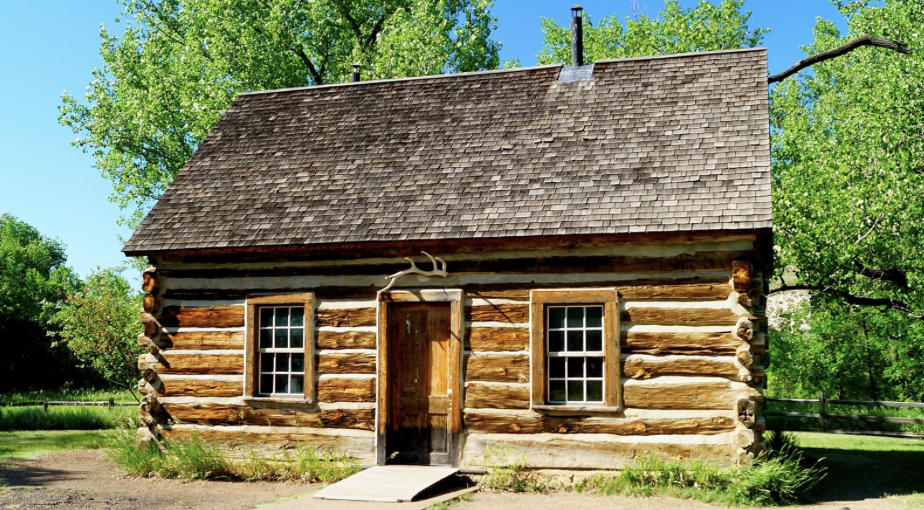
Pictured above is Theodore Roosevelt’s Maltese Cross Cabin, located in Theodore Roosevelt National Park. He lived here from 1883 to 1884 before relocating to Elkhorn Ranch, a larger cabin further north, until 1887. Roosevelt reviews his time in the “Badlands” as a transformative time, preparing him for the presidency: “I would not have been President had it not been for my experience in North Dakota.”
Following Roosevelt, presidents continued the precedent of expanding the national park system, reaching a total of 63 designated “National Parks”, 433 units (including monuments and historical sites), and 155 national forests. The National Park Service (NPS), established in 1916 by President Wilson’s signing of the Organic Act, works to maintain the distinct and natural beauty of the landscapes, wildlife, and ecosystems for which each of these parks is famous. As tourism in national parks reached an all-time high in 2024, surpassing 332 million recreational visits, the need for federal funding to the NPS and other park services should be a given.
On May 2, 2025, the Trump Administration released its budget plan for the 2026 fiscal year. The proposed plan called for a budget cut of more than $1 billion for the National Park Service, the largest cut in the NPS’s 109-year existence. The plan also proposed turning national park sites over to state authority and removing them from the National Park System. President Trump’s proposed cuts, following the aforementioned record-breaking year of visits, would reduce the operational budget by $900 million, construction by $73 million, recreation and preservation by $77 million, and Historic Preservation by $197 million.
President Trump's proposal follows a historic trend of undermining park services and operations during his second term. On January 20th, President Trump, under the guidance of the Department of Government Efficiency (DOGE), signed an executive order to initiate an effective-immediately hiring freeze on unfilled federal positions, including crucial seasonal positions under the NPS. The freeze removed over 2,000 seasonal and permanent positions, creating major staffing shortages for the busy spring and summer seasons. On February 14th, the Trump Administration initiated the "Valentine's Day Massacre”, a mass firing of 1000 probationary NPS employees responsible for maintaining and cleaning parks, educating visitors, and collecting admission fees. These firings were met by significant bipartisan criticism: In a plea to Interior Secretary Doug Burgum, eight Democratic Virginia congressmen — Sen. Mark Warner, Sen. Tim Kaine, Rep. Bobby Scott, Rep. Gerry Connolly, Rep. Don Beyer, Rep. Jennifer McClellan, Rep. Suhas Subramanyam, and Rep. Eugene Vindman — wrote, “These roles are critical to protecting America’s treasured natural assets, maintaining public safety and promoting exceptional standards” and if “these directives are not reversed, we fear it will significantly undermine the Park Service’s ability to protect both visitors and park resources, particularly as we approach peak visitation season,”
In a similar fashion, Maine’s Republican Senator Susan Collins expressed her concern that Acadia National Park would “not be able to hire the seasonal employees required to collect entrance fees and perform other essential tasks such as maintaining trails and providing first responder services to visitors.”
Amid the criticism and closures, the Trump Administration stated on February 21st that it planned to restore the jobs of “dozens” of NPS employees fired during the government’s aggressive downsizing plan. The NPS pledged to hire a total of 7,700 seasonal employees, a large increase from the previous three-year average of 6,350 seasonal employees. Despite these promises, the initial layoffs created confusion and left many parks understaffed, forcing reduced hours and unforeseen closures. Furthermore, the lack of any concrete plan to reinstitute laid-off employees left many individuals unemployed, raising criticisms against Interior Secretary Doug Burgum: “There’s no real staffing plan. It’s chaotic, and there’s no leadership from the Secretary of the Interior,’' said Tim Whitehouse, executive director of the group Public Employees for Environmental Responsibility.”
Ultimately, the response to the Trump Administration’s proposed budget cuts for the NPS, its employees, and other environmental services was a unified bipartisan rejection. On January 19th, 2026, Congress passed the Fiscal Year 2026 Interior, Environmental, and Related Agencies Appropriations Bill with an overwhelming 82-15 victory. The bill funds the Department of the Interior, the umbrella agency for the NPS, the Bureau of Land Management, and the Fish and Wildlife Service, and determines monetary allocations for operations, staffing, maintenance, historical preservation, and conservation.
In stark contrast to Trump’s proposed $1 billion in budget cuts, the legislation includes a flat funding of $2.87 billion for maintaining the park service, keeping it at a steady rate from the previous fiscal year. Additionally, the bill includes three park-adjacent provisions: guaranteed funding for National Heritage Areas to support historical preservation and heritage, a 21% increase for the Historic Preservation Fund, and more guaranteed funding for Tribal Historic Preservation Offices.
Since the start of 2025, the NPS has seen a significant reduction in employment, losing around 25% of its permanent staff and making fewer seasonal hires since January due to budget cuts and management directives. Over 4,000 permanent employees were lost after layoffs, buyouts, and resignations, forcing visitor centers to close or reduce hours and critically halting park maintenance and research.
The bill provides sufficient funds to sustain 2024 staffing levels and a full roster of seasonal staff during the 2026 fiscal year. Additionally, the bill requires reports on staff and visitation levels, furthering pressure on the Trump Administration to maintain sufficient NPS funding and staffing. Members of Congress who composed the bill “used clear language expressing their intent for the Park Service to be sufficiently staffed to meet its mission to protect world-class resources and ensure public enjoyment and safety”, reflecting a unified pushback from lawmakers and the NPCA against the Trump Administration’s 2025 policies and a callback to President Grant’s initial intention for our park system.
Despite the success of public and congressional pressure, the bill does have notable faults. For one, the bill cuts appropriated deferred maintenance funding, which is critical for repairing and rehabilitating campgrounds, visitor centers, roads, water systems, and trails. Cutting the appropriations, which are already insufficient fixes for backlogged maintenance, will further prevent essential repairs from moving towards completion. Furthermore, despite congressional attempts, the bill does not include any language that prevents future executive orders or DOGE initiatives from reducing the number of NPS employees again. However, the bill does maintain that the Trump Administration notify Congress of any reorganization or firing efforts at the NPS and allow for review and approval of their plans, a much-needed safety net for an agency shredded by 2025 layoffs and cuts.
In response to the Trump Administration’s plan to shift control of National Parks to states or private companies, the NPCA and congressional members of each party pushed for “key language” that required all National Parks remain federal property. Despite public and bipartisan support for the language, it was ultimately removed from the bill.
The bipartisan support for the bill and the concerned reactions from both lawmakers and the public present an overall unified rejection of the Trump Administration's treatment of the National Park System and its employees; however, it is unclear if the administration will continue its attempts to undermine the operations of the NPS and adjacent services.
The opposition to Trump's policies surrounding our National Parks remains crystal clear however, as a U.S. District Judge Cynthia Rufe, appointed by Republican President George W. Bush, ordered the restoration of a slavery exhibit detailing the lives of nine enslaved individuals living under former President George Washington and his wife, Martha Washington, at Independence National Park. The order is a response to an executive order issued by President Trump on March 27, 2025. The order, ironically titled “Restoring Truth and Sanity to American History,” mandated the removal of “divisive” race-based ideology and “improper partisan ideology” from all federal monuments, parks, and museums.
Ultimately, the Trump Administration’s failure to pass its proposed 2026 budget cuts is a notable victory for the NPS, park-adjacent services, and the public as a whole. Hopefully, the Trump Administration perceives the public and congressional discourse towards the bill as a sign that reducing NPS funding is not a reflection of the American public’s will.
Sources:
https://www.whitehouse.gov/presidential-actions/2025/01/hiring-freeze/
https://apnews.com/article/trump-national-park-firings-elon-musk-d0cdc23fe5fac68e4dc8ef58f041ced4
https://www.npca.org/articles/11293-inside-the-fy26-national-park-service-budget
